


By MES Dispatch Staff
The Briefing
- The California Supreme Court ruled unanimously Thursday that Riverside County Sheriff Chad Bianco must return roughly 650,000 ballots he seized in February from a November 2025 special election on congressional redistricting.
- The court found the seizure “unlawful,” ruling that state law requires ballots to remain in the custody of election officials even during a criminal investigation.
- Bianco said he seized the ballots as part of a criminal probe after a local citizens group alleged the vote count was off; county election officials had said the complaint was unfounded.
- California Attorney General Rob Bonta challenged the seizure in court, and the UCLA Voting Rights Project separately sued Bianco and the Riverside County Registrar of Voters on behalf of local voters.
- Gov. Gavin Newsom signed a bill Saturday that would bar future ballot seizures of the kind Bianco carried out; Bianco has not commented on the ruling.
SAN FRANCISCO — The California Supreme Court ruled Thursday that Riverside County Sheriff Chad Bianco must return approximately 650,000 ballots he seized in February, finding the seizure unlawful under state election law.
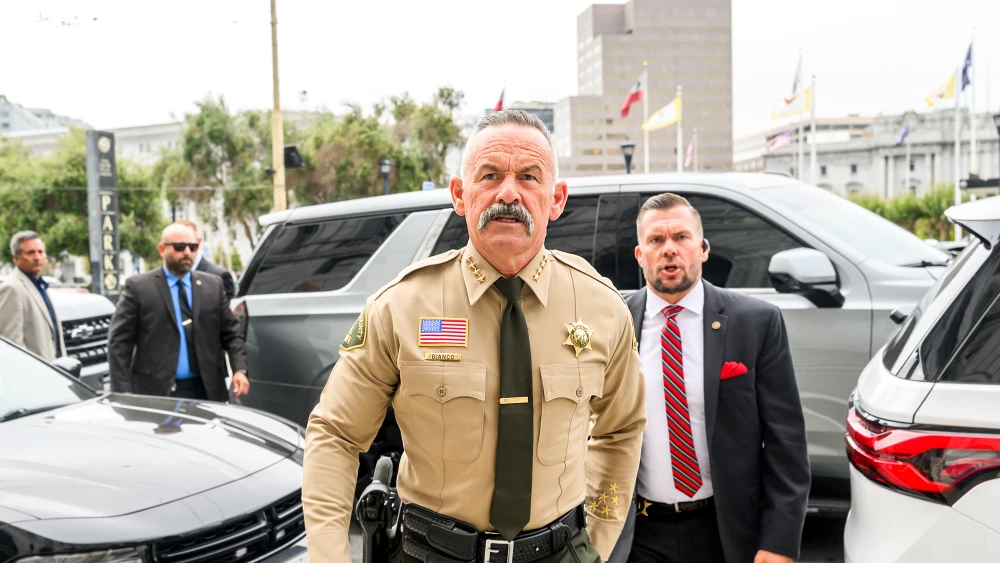
Bianco seized the ballots from a November 2025 special election on statewide congressional redistricting, a measure backed by Gov. Gavin Newsom that passed statewide and won in Riverside County by roughly 80,000 votes. The court’s unanimous decision found that California law requires voted ballots to remain in the custody and control of election officials, even during a criminal investigation, and ordered Bianco to “refrain from further handling of the ballots except as necessary to comply with our order.” The court added that a search warrant does not override the state’s election code, and that other legal mechanisms exist for law enforcement to review ballots without seizing them.
Bianco has said he took the election materials as part of a criminal investigation after a local citizens group complained that the vote count appeared off; local election officials had previously called the complaint unfounded. He began recounting the ballots using sheriff’s officials under a court-appointed special master before suspending the recount days later, citing legal challenges. He has not returned the ballots since. Bianco’s attorney, Bradley Hertz, argued the sheriff had a legal duty to investigate the complaint and that the ballots remain evidence in an open case.
Attorney General Rob Bonta, a Democrat, sued to challenge the seizure, arguing Bianco lacked authority over election materials. “The Court has now made clear that this kind of defiance cannot stand, that the Attorney General has the authority to intervene when sheriffs take improper action, and that voted ballots belong in the custody of elections officials,” Bonta said following the ruling. The UCLA Voting Rights Project separately sued Bianco and the Riverside County Registrar of Voters on behalf of several county voters; both cases were argued before the state Supreme Court last month.
“The Court’s decision reaffirms a basic principle that in California, the Election Code applies to everyone, including law enforcement,” said Chad Dunn, legal director and co-founder of the UCLA Voting Rights Project.
Bianco was among several Republican candidates in California’s crowded June gubernatorial primary at the time of the seizure but did not advance to the general election; he has since announced plans to seek reelection as sheriff in 2028. Newsom signed a bill Saturday that would prohibit future seizures of ballots of the kind Bianco carried out.