


By MES Dispatch Staff
The Briefing
- San Diego Police Chief Scott Wahl rejected a recommendation from the city’s Commission on Police Practices to end traffic stops based on minor violations such as broken taillights and tinted windows, so-called pretext stops.
- In a nine-page memo, Wahl said such stops remain a lawful investigative tool that leads to recoveries of firearms, narcotics and trafficked minors, along with warrant and DUI arrests.
- The commission, which made its recommendations in August, called the response “untimely and tone deaf,” noting it arrived three days after the 60-day deadline.
- The commission’s staff cited 2024 stop data showing substantial racial disparities, including that people perceived to be Black were 4.42 times more likely to be frisked than people perceived to be White.
- Wahl agreed with the commission’s procedural justice training recommendations but disagreed with others, saying they conflict with current legal standards.
SAN DIEGO — San Diego Police Chief Scott Wahl has rejected the city’s police oversight commission’s recommendation to end traffic stops for minor equipment violations, saying such a restriction could hurt public safety, the San Diego Union-Tribune reported.
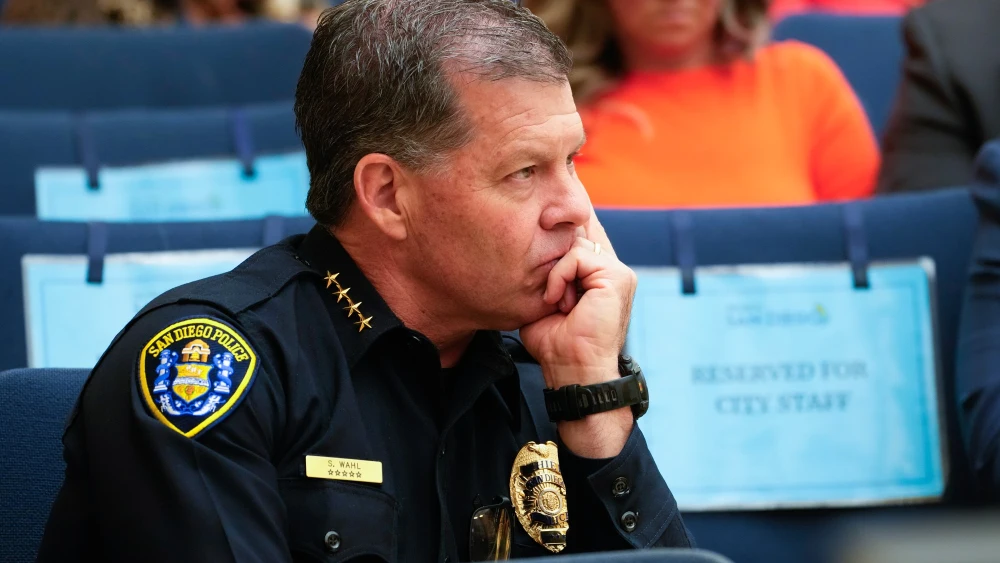
In a nine-page memo to the Commission on Police Practices, Wahl said current department policies and training already address many of the reforms the commission sought. The commission had called in August for the department to restrict pretext stops, in which officers use low-level violations such as broken brake lights, expired registration tags or missing front license plates as grounds to stop drivers and investigate unrelated suspected crimes, and to promote “bias-free” policing.
Wahl acknowledged the concerns and disparity data the commission cited but said the stops continue to produce recoveries of firearms and narcotics, outstanding warrants, DUI arrests and the recovery of sex-trafficked minors that would otherwise go undetected. A blanket prohibition on initiating stops for the listed violations, he wrote, would reduce proactive opportunities to address public safety threats. He also said other jurisdictions that adopted similar limits have not shown that they meaningfully reduced racial disparities or improved public safety.
The commission criticized the response in a statement, calling it “untimely and tone deaf” because it was submitted three days after the department’s 60-day deadline under the municipal code. A department spokesperson said the response was not provided Friday because it was not finished. The commission said Wahl accepted the spirit of its recommendations but rejected their substance, and argued that traffic stops are meant to enforce laws that protect the public from danger, not to look for unrelated crimes. It said such stops can lead to harassment and avoidable confrontations.
The commission’s recommendations followed staff analysis of California Racial and Identity Profiling Act data. San Diego’s 2024 data showed that people perceived to be Black were 4.42 times more likely to be frisked than people perceived to be White, and 3.36 times more likely to be asked for consent to search their property. They were also more than three times as likely to be handcuffed or subjected to force, the commission’s report said, with similar but generally smaller disparities for people perceived to be Hispanic or Latino.
Wahl said the department supports many principles behind the recommendations, including reducing racial disparities and strengthening procedural justice, and agreed with the call for procedural justice training, which he described as a cornerstone of recruit and officer training. He disagreed with other proposals, including barring stops based on parole or probation status or prior criminal history, limiting questioning during stops to the reason for the stop absent independent reasonable suspicion, and ending field interviews that begin with a low-level violation. He said the department would not support categorically restricting lawful consensual encounters, and that a field interview is a voluntary contact rather than a detention.
The commission was created after voters approved a 2020 ballot initiative to provide independent community oversight of the department. In 2024, it recommended tighter pursuit restrictions, which the department declined to adopt. The commission’s executive director, Roger Smith, urged city leaders and residents to continue discussing changes to the practice.