
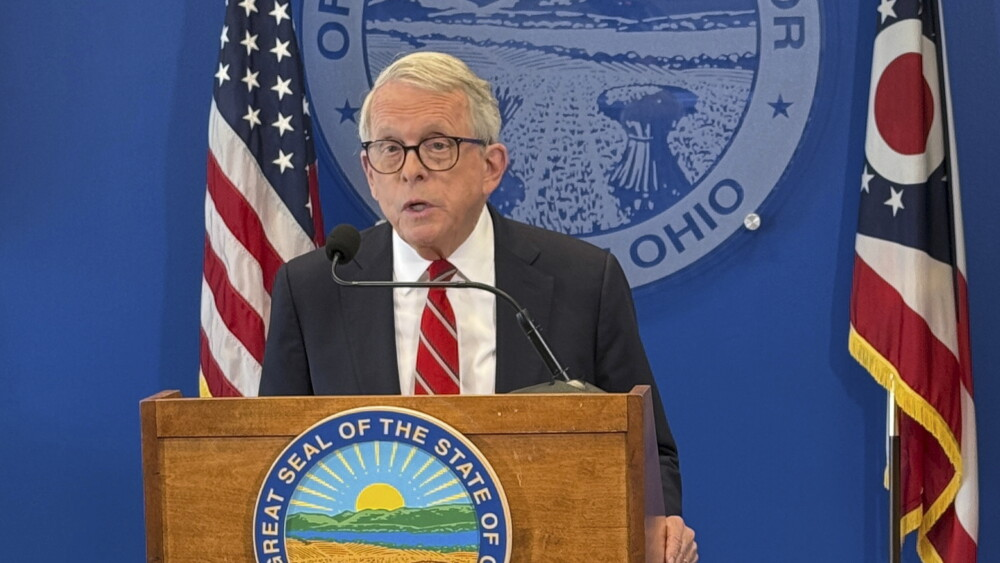


By MES Dispatch Staff
The Briefing
- Ohio Gov. Mike DeWine announced on June 18 that the state should abolish capital punishment, reversing his previous support for the practice he helped establish as a state legislator 45 years ago.
- DeWine stated that data demonstrates the death penalty does not deter violent crime and that executions bring prolonged pain to victims’ families while harming the mental health of state execution team employees.
- The governor cited lengthy legal appeals, declining death sentences issued by courts, and the increasingly remote likelihood of executions actually being carried out as reasons for his position.
- Ohio has not executed an inmate since July 2018, despite having 30 executions scheduled over the next four years; Republican House Speaker Matt Huffman said in February he would “vigorously oppose” legislative efforts to repeal capital punishment.
- DeWine, facing a December term limit, said his outright opposition crystallized over the past year after 50 years of experience with the issue as a county prosecutor, congressman, U.S. senator, and attorney general.
COLUMBUS, OHIO — Gov. Mike DeWine called Tuesday for Ohio to abolish capital punishment, citing data indicating the death penalty has become an ineffective deterrent to violent crime and no longer serves the intended purpose he supported when helping draft the state’s capital punishment law in 1981.
At a June 18 news conference, DeWine said he could no longer argue that the death penalty deters crime. The 79-year-old governor presented charts and graphs showing declining numbers of death sentences issued by courts and extending gaps in time between sentencing and execution as legal appeals proceed.
“In summary, each decade that the death penalty has been in effect, the chances of a murderer getting executed get more and more and more remote,” DeWine said. He noted that condemned inmates often die of natural causes or suicide before execution dates arrive, and that he expects no further executions during his remaining term.
DeWine, who has postponed multiple scheduled executions during his two four-year terms, said the death penalty’s continuation causes prolonged suffering for victims’ families and creates mental health burdens for state employees assigned to execution teams. He said his position has been shaped by five decades of involvement with the issue, beginning as a county prosecutor and continuing through service in Congress, the U.S. Senate, and as Ohio’s attorney general.
Ohio has conducted no executions since July 18, 2018, when Robert Van Hook was put to death. The state has 30 executions scheduled over the next four years and has carried out 56 lethal injections since resuming capital punishment in 1999. DeWine has repeatedly cited pharmaceutical suppliers’ refusal to provide lethal injection drugs as a reason for postponing scheduled executions.
Legislative support for abolition appears uncertain. Republican House Speaker Matt Huffman said in February he would “vigorously oppose” repeal efforts, and former Attorney General Dave Yost agreed. The position of Interim Attorney General Andy Wilson, appointed last month, remains unclear. However, the Catholic Conference of Ohio issued a statement supporting DeWine’s announcement, citing the dignity of the human person.
Several other states have begun reconsidering capital punishment. New Hampshire abolished the death penalty in 2019, Colorado in 2020, and Virginia in 2021. Pennsylvania Gov. Josh Shapiro has urged legislators to follow suit, while Oregon Gov. Kate Brown commuted sentences for all 17 people on that state’s death row in 2022. Former Ohio Gov. Bob Taft, who oversaw 24 executions between 1999 and 2007, issued a statement supporting DeWine’s position.