


By MES Dispatch Staff
The Briefing
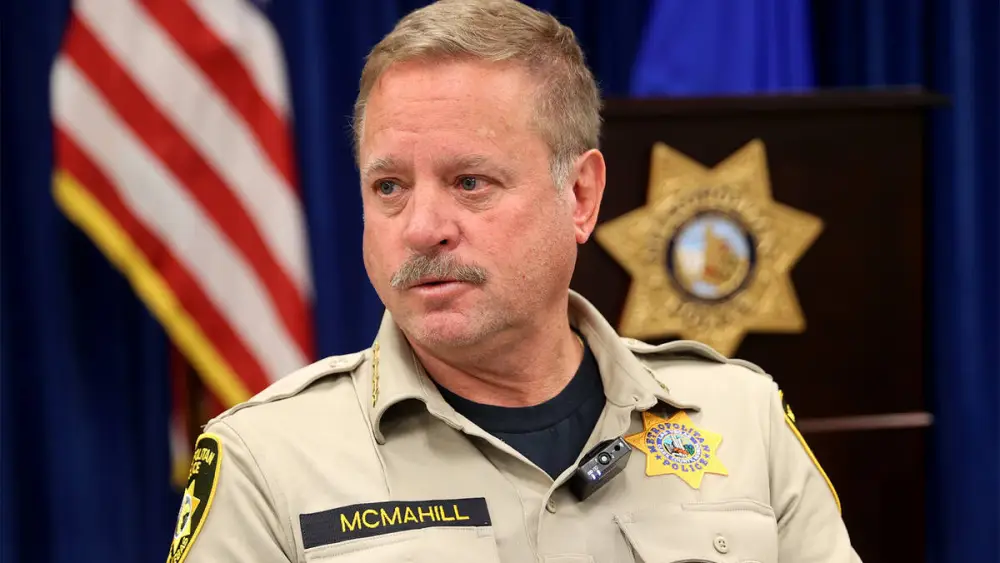
- Clark County Sheriff Kevin McMahill modified the Metropolitan Police Department’s vehicle pursuit policy to authorize officers to pursue motorists suspected of driving under the influence, operating stolen vehicles, and individuals identified as suspects in extensive criminal investigations.
- The policy change allows supervisors to authorize pursuits on a case-by-case basis, considering public safety risks, road conditions, weather, and technological tracking capabilities available to officers.
- McMahill stated that department personnel became aware criminals were intentionally fleeing because they understood Metro’s previous restrictions, creating a public safety concern.
- The revised policy incorporates technological assistance including drones, helicopters, and immobilization devices known as the “Grappler” to manage pursuit risks and apprehend fleeing suspects.
- Metro conducted 60 vehicle pursuits in 2025, slightly below a five-year average of 64; approximately 90 percent of 2025 pursuits involved felony offenses.
LAS VEGAS, NV — Clark County Sheriff Kevin McMahill announced modifications to Metropolitan Police Department pursuit protocols that now permit officers to initiate vehicle chases for drivers suspected of driving under the influence, operating stolen vehicles, and individuals targeted in comprehensive criminal investigations.
The policy revision addresses previous departmental restrictions that prohibited pursuit of motorists in these categories. McMahill stated that criminals operating in the Las Vegas area became increasingly aware of pursuit limitations and exploited this knowledge when evading law enforcement. “If we just let them go constantly, they are going to continue to commit crime in our community,” McMahill said.
Under the modified policy, supervisory personnel retain discretionary authority to authorize or decline individual pursuits. Supervisors evaluate factors including threats to public safety, road and weather conditions, and the availability of technological tools to track fleeing vehicles. The policy applies to suspects in major case investigations involving crime series where multiple offenses have been attributed to a single individual or group.
Technological advancements support pursuit management under the revised policy. Officers may deploy drones, helicopter support, and the “Grappler,” a police immobilization device designed to disable fleeing vehicles without high-speed continuation. McMahill characterized these tools as critical components enabling officers to apprehend suspects while reducing collision risks.
Metro conducted 60 vehicle pursuits in 2025, representing a slight decrease from the five-year average of 64 pursuits annually. Department data indicated approximately 90 percent of 2025 pursuits involved felony offenses. McMahill acknowledged the policy carries inherent risks, noting past incidents where pursuit-related collisions caused serious injuries to uninvolved motorists. The sheriff stated supervisory personnel must consistently weigh public safety risks against offense severity in individual pursuit decisions.