


By MES Dispatch Staff
The Briefing
- New York has enacted a first-of-its-kind law requiring 3D printers sold for home and business use to include technology that blocks them from producing firearm parts.
- California lawmakers are considering similar legislation, which would make the two states the first to regulate 3D-printing hardware rather than the people who use it to make untraceable “ghost guns.”
- The mandate stems from a rise in privately made firearms recovered in crimes, which grew from about 1,600 in 2017 to nearly 27,500 in 2023, according to a Justice Department report.
- Both states’ laws direct expert panels to develop blueprint-detection standards before manufacturers must comply, with the technology requirement not taking effect until 2029 at the earliest.
- Industry representatives and digital rights advocates have raised doubts about whether the detection technology will work as intended and questioned its effects on privacy and lawful 3D-printing activity.
NEW YORK — A newly signed New York law will require 3D printers sold to consumers and businesses to come equipped with technology designed to stop them from manufacturing gun parts, marking the first such mandate in the country. A similar measure is under consideration in the California Legislature.
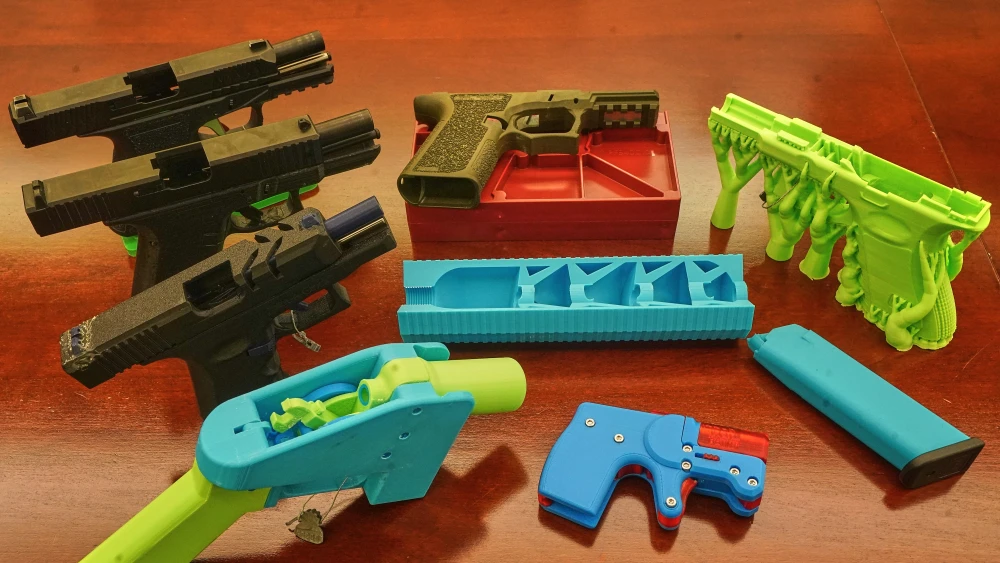
The requirement targets a growing source of untraceable “ghost guns” turning up in criminal investigations. About a third of U.S. states already restrict homemade firearms that lack serial numbers, but the new approach is the first to regulate the printing equipment itself rather than the individuals who use it.
According to industry figures cited by Bill Decker, executive chairman of the Association of 3D Printing, the number of 3D printers in use worldwide has grown sharply over the past decade, and devices capable of producing firearm components are now widely affordable. Federal data show privately made guns recovered in crimes rose substantially between 2017 and 2023, and authorities have said a 3D-printed firearm was likely used in the 2024 killing of UnitedHealthcare’s CEO in New York.
Under the New York law and the proposed California bill, expert panels will first develop technical standards for software that scans firearm blueprints submitted for printing and rejects designs matching a digital library of gun components. The requirement that printers actually include the blocking technology would not take effect until 2029, or later if regulators determine the approach is not yet feasible.
Supporters, including Everytown for Gun Safety policy director Samuel Levy, said 3D printing has become a significant route for people barred from legally buying firearms to obtain them, and that blocking the printing process directly could close that gap. Opponents, including the National Rifle Association’s Institute for Legislative Action, argue the law restricts a long-standing practice of home gun-making by law-abiding citizens.
Technology experts and industry representatives remain divided on feasibility. Association of 3D Printing’s Decker said the detection systems will not function as advertised and called the effort largely symbolic, while Rory Mir of the Electronic Frontier Foundation warned that aggressive filtering could mistakenly block legitimate designs and raise privacy concerns for users submitting projects to cloud-based scanning systems. The legislation does not face an immediate compliance deadline, as standard-setting work is expected to continue over the next several years.