


By MES Dispatch staff
The Briefing
- The North Dakota Highway Patrol is expanding its search-and-rescue capabilities with the addition of a new bloodhound named Beau.
- The 12-week-old puppy will join the agency’s trailing dog program based in Fargo, North Dakota.
- Bloodhounds are used to locate missing children, people with dementia and criminal suspects across the Upper Midwest.
- The Highway Patrol receives about 70 calls each year requesting its bloodhound teams, including assistance in neighboring states.
- Officials say the dogs remain a critical ground-search tool despite the use of drones and aircraft in modern search operations.
FARGO, N.D. — The North Dakota Highway Patrol is expanding its search-and-rescue capabilities with the addition of a new bloodhound puppy that will eventually join the agency’s trailing dog program.
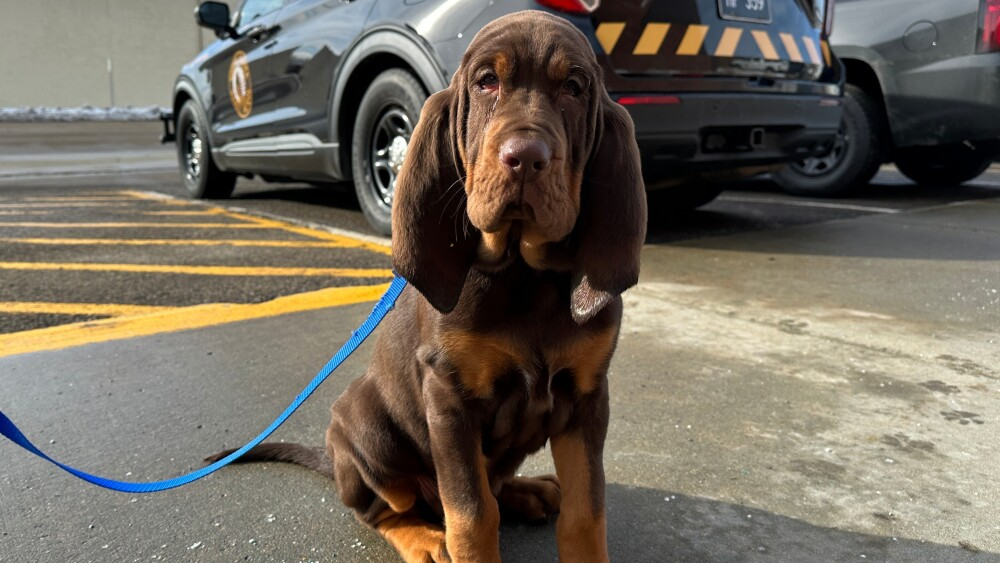
The 12-week-old bloodhound, named Beau, recently joined the patrol in Fargo and will be trained to locate missing persons and criminal suspects across the region. Once fully trained and certified, the dog will become part of a specialized team that assists law enforcement agencies throughout the Upper Midwest.
Bloodhounds are used by the Highway Patrol to trail missing children, individuals with dementia and suspects who have fled from crime scenes. Although agencies often deploy drones and aircraft during search operations, officials say scent-tracking dogs remain a reliable ground-level resource for locating individuals.
The Highway Patrol’s bloodhound teams receive approximately 70 requests for assistance each year. Those calls can come from across the region, including previous deployments to states such as Montana, South Dakota and Utah during major investigations and missing-person searches.
Beau’s handler, Trooper Dustin Pattengale, said the young dog’s initial training will focus on basic obedience, socialization and introduction to scent articles. As the dog matures, training will gradually expand to longer and more complex trails in a variety of environments, with certification expected once the dog reaches about nine months of age.
Officials say bloodhounds remain valuable because of their scent-tracking ability, with roughly 300 million scent receptors and physical features that help retain and follow odor trails. Those capabilities allow trained dogs to track human scent long after a person has passed through an area.